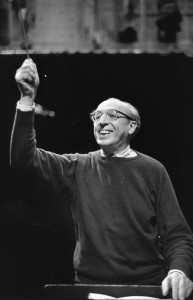
Aaron Copland, a towering figure in American music, played a central role in shaping the country's musical landscape for over half a century as a composer, promoter, and educator. His iconic music, such as "Fanfare for the Common Man" and "Rodeo," transcends the concert hall, resonating in popular culture worldwide. Raised in Brooklyn to Lithuanian Jewish immigrants, Copland's early immersion in music led him to study in Paris under renowned mentors like Nadia Boulanger, influencing his development of an "American" style marked by simplicity and directness.
As Copland's career progressed, he embraced experimentation while maintaining a lyrical essence in his music, exploring new means of expression such as 12-tone principles. Despite a decline in productivity from the mid-'50s onwards, Copland's legacy as a composer, conductor, and music educator remained profound. His contribution to American music was further solidified through his autobiography, a crucial resource for understanding the evolution of music in the 20th century.